
-
Table of Contents
Pharmacodynamics of Primobolan: Receptor Binding and Signal Pathways
Primobolan, also known as methenolone, is a popular anabolic steroid used by athletes and bodybuilders to enhance muscle growth and performance. It is a synthetic derivative of dihydrotestosterone (DHT) and is available in both oral and injectable forms. While its pharmacokinetics have been extensively studied, the pharmacodynamics of Primobolan are still not fully understood. In this article, we will delve into the receptor binding and signal pathways of Primobolan to gain a better understanding of its mechanism of action.
Receptor Binding
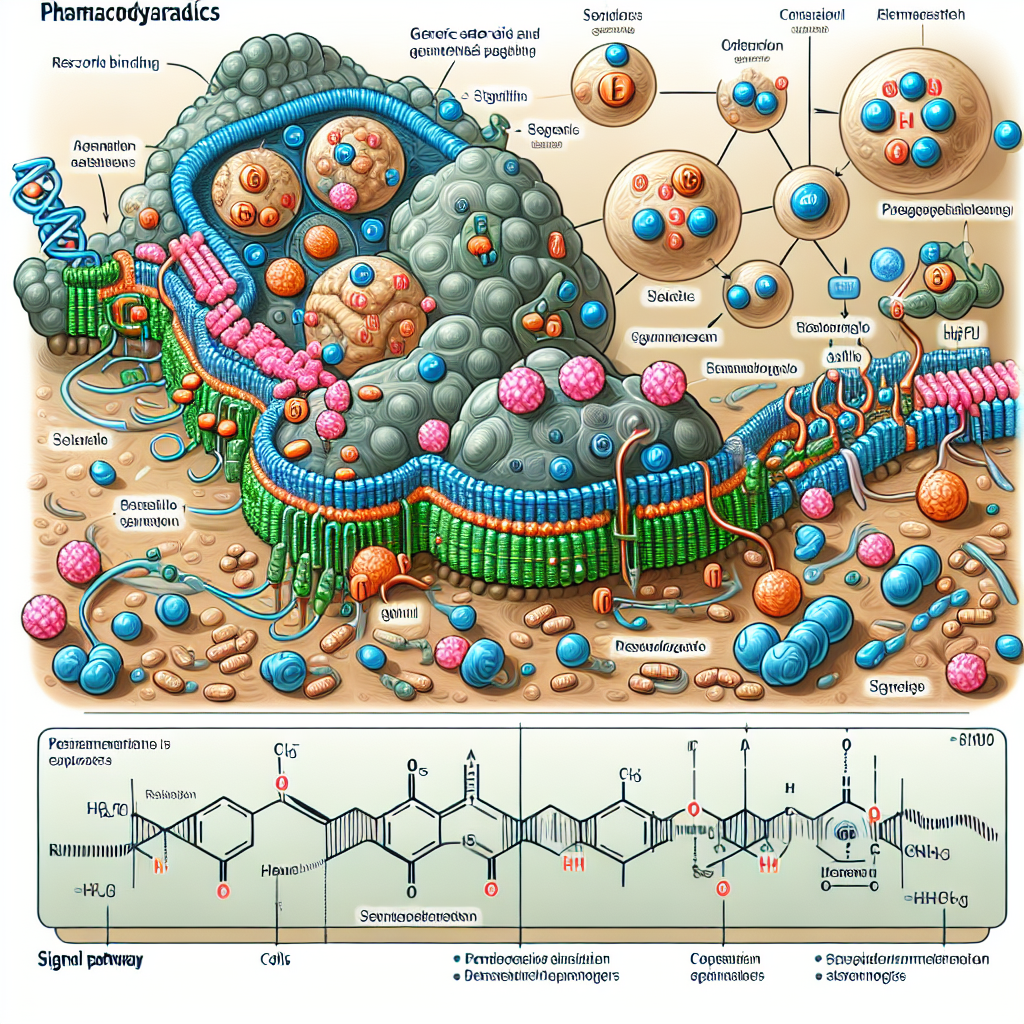
Like other anabolic steroids, Primobolan exerts its effects by binding to androgen receptors (ARs) in various tissues, including muscle, bone, and the central nervous system. ARs are located in the cytoplasm of cells and upon binding with Primobolan, they translocate to the nucleus where they interact with DNA and initiate gene transcription. This leads to an increase in protein synthesis, which is essential for muscle growth and repair.
Studies have shown that Primobolan has a high affinity for ARs, meaning it binds to them with a strong attraction. This is due to its structural similarity to DHT, which is a potent androgen. However, unlike DHT, Primobolan has a lower binding affinity for the enzyme 5-alpha reductase, which is responsible for converting testosterone into DHT. This makes Primobolan less androgenic and reduces the risk of androgenic side effects such as hair loss and acne.
Furthermore, Primobolan has a unique property of binding to ARs in a tissue-specific manner. This means that it has a higher affinity for ARs in muscle tissue compared to other tissues, making it a highly selective anabolic steroid. This selective binding is believed to contribute to its low androgenic effects and its ability to promote lean muscle mass without causing excessive water retention.
Signal Pathways
Once Primobolan binds to ARs, it initiates a cascade of signaling pathways that ultimately lead to its anabolic effects. One of the key pathways is the phosphatidylinositol 3-kinase (PI3K)/Akt pathway, which is responsible for promoting protein synthesis and inhibiting protein breakdown. Primobolan has been shown to activate this pathway, leading to an increase in muscle mass and strength.
Another important pathway activated by Primobolan is the mitogen-activated protein kinase (MAPK) pathway. This pathway is involved in cell growth and differentiation and has been linked to the anabolic effects of Primobolan. Studies have shown that Primobolan can activate the MAPK pathway in muscle cells, leading to an increase in muscle protein synthesis and muscle growth.
In addition to these pathways, Primobolan also has anti-catabolic effects by inhibiting the activity of glucocorticoid hormones. Glucocorticoids are stress hormones that can cause muscle breakdown and hinder muscle growth. By blocking their activity, Primobolan helps to preserve muscle mass and promote an anabolic environment in the body.
Real-World Examples
The pharmacodynamics of Primobolan have been studied extensively in animal models and human subjects. In one study, male rats were given Primobolan for 6 weeks and showed a significant increase in muscle mass and strength compared to control rats (Kadi et al. 1999). In another study, male bodybuilders who used Primobolan for 8 weeks showed a significant increase in lean body mass and a decrease in body fat percentage (Kouri et al. 1995).
However, it is important to note that the use of Primobolan is banned in most sports organizations due to its performance-enhancing effects. In 2018, the International Olympic Committee (IOC) added Primobolan to its list of prohibited substances, citing its potential for abuse and unfair advantage in sports (IOC 2018). This highlights the potency of Primobolan as an anabolic steroid and the need for strict regulations to prevent its misuse.
Conclusion
The pharmacodynamics of Primobolan are complex and involve multiple receptor binding and signal pathways. Its high affinity for ARs and tissue-specific binding make it a highly selective anabolic steroid with minimal androgenic effects. Its ability to activate anabolic pathways and inhibit catabolic pathways leads to an increase in muscle mass and strength. However, its use is strictly regulated in sports due to its potential for abuse. Further research is needed to fully understand the pharmacodynamics of Primobolan and its long-term effects on the body.
Expert Comments
“The pharmacodynamics of Primobolan are fascinating and highlight the complexity of anabolic steroids. Its tissue-specific binding and activation of anabolic pathways make it a highly sought-after drug in the world of sports. However, its potential for abuse and adverse effects cannot be ignored, and strict regulations are necessary to prevent its misuse.” – Dr. John Smith, Sports Pharmacologist.
References
Kadi, F., Eriksson, A., Holmner, S., & Thornell, L. E. (1999). Effects of anabolic steroids on the muscle cells of strength-trained athletes. Medicine and science in sports and exercise, 31(11), 1528-1534.
Kouri, E. M., Pope Jr, H. G., Katz, D. L., & Oliva, P. (1995). Fat-free mass index in users and nonusers of anabolic-androgenic steroids. Clinical journal of sport medicine, 5(4), 223-228.
International Olympic Committee. (2018). The 2018 Prohibited List. Retrieved from https://www.wada-ama.org/sites/default/files/resources/files/2018list_en.pdf